Do I Need an OT Assessment Before Buying Assistive Technology?
Author: Christian (Director | Principal OT)
In most cases, the answer to this question is yes, particularly for anything beyond a very low-cost, low-risk item. An occupational therapist's role is to match the person, the activity, the technology, and the environment, and getting that match wrong can mean wasted money, unmet needs, or in some cases, injury. Whether a formal assessment is strictly required, and what that looks like, depends on how the purchase is being funded and how much the item costs. The specifics can differ across the NDIS, My Aged Care, DVA, workers compensation and private funding, but the thinking behind the process doesn't change much.
Why an OT assessment matters, beyond ticking a funding box
It's tempting to think of an OT assessment as paperwork you need to get through before you can buy what you already know you want. In practice, it does something far more useful than that.
Under the NDIS, My Aged Care, and other compensable schemes, the evidence required to fund assistive technology in a participant's plan depends on the cost of the item. But there's a reason behind these funding requirements, beyond the red tape. The more complex or higher-risk the equipment, the more ways there are to get the fit wrong, and the more that matters.
A mobility scooter, a walking frame, a lift chair, or an electric bed all interact directly with a person's body, their home, and their daily routines, and these are often the items that are purchased without an OT involved at all, sometimes based on a showroom visit or a product description alone. The same applies further up the scale, a wheelchair, a pressure care mattress, or a ceiling hoist, though by that point an OT is usually already part of the picture. Get the sizing, configuration, or type wrong on any of these, and you're not just out of pocket, you can end up with pressure injuries, falls, reduced function, or equipment that sits in a shed because it was never fit-for-purpose.
It's not all about the report
An OT assessment can feel like a hurdle standing between someone and the equipment they've already decided they want. It isn't meant to be one. An OT isn't there to approve or block a purchase, we're there because getting the right fit is difficult to work out on your own, and the consequences of getting it wrong land on the person using the equipment, not on whoever approved the funding.
What that process actually looks like is less about the equipment itself, and more about everything around it. We're looking at the person, their strength, coordination, and endurance, and how those change throughout the day or under different conditions. We're looking at the environment the equipment needs to work in, the layout of a home, the surfaces and thresholds they need to get across, how it might need to be transported, who else might be involved in helping them use it. And we're looking at what the person actually needs to do, their routines, their goals, the parts of daily life that matter most to them, not just a diagnosis on a referral form. The right piece of equipment sits at the point where all three of those line up, and this means that two people with the same diagnosis on paper can end up needing completely different equipment once you look at it this way.
The value here isn't the document, it's the critical thinking and clinical reasoning behind the recommendation. Anyone can write a letter recommending a piece of equipment. What you're actually paying for is the clinical reasoning that determines whether the recommendation is right, and that's the difference between equipment that gets used every day and equipment that ends up in a shed.
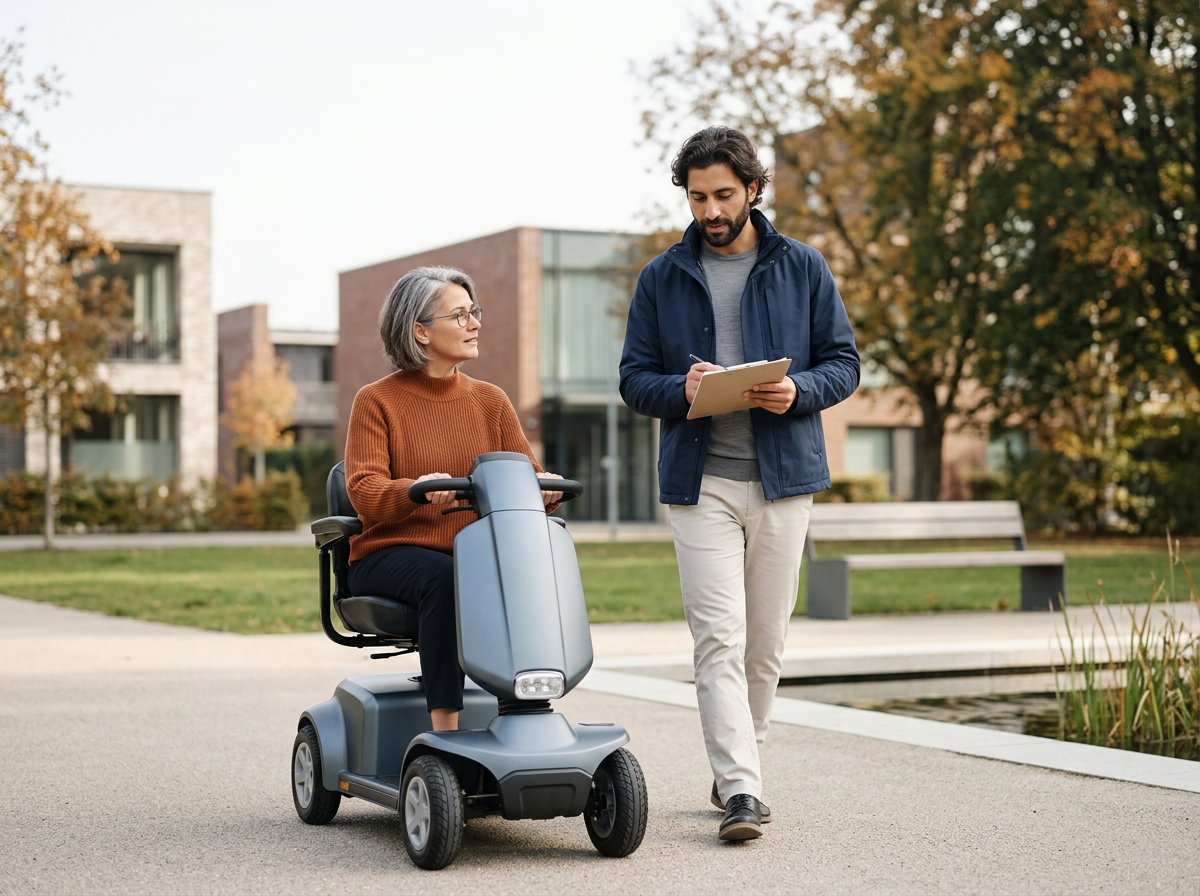
Image generated using Squarespace AI Image Studio
Every scheme draws the line a little differently
Every compensable system, the NDIS, My Aged Care, DVA, workers compensation, private insurers, has its own way of categorising assistive technology and deciding how much evidence a purchase needs, and the process to apply for funding. The categories don't line up neatly across schemes, and the terminology differs, but the same basic logic tends to hold: the more the item costs, and the more risk it carries, the more evidence is expected before it's funded.
NDIS
Structured around three cost tiers: low-cost (under $1,500), mid-cost ($1,500–$15,000), and high-cost (over $15,000)
Access is triggered by having assistive technology included in your NDIS plan
Evidence scales with cost and risk, from general advice for low-cost items through to a full assessment from a qualified assessor for high-cost items
Assistive technology advisors are typically involved for lower-cost items, assessors (often OTs) for high-cost items
My Aged Care (AT-HM scheme)
Structured around three funding tiers within a 12-month access period: low (up to $500), medium (up to $2,000), and high (up to $15,000, more with evidence)
Access is triggered by an aged care assessment, which determines both eligibility and funding tier
Your Support at Home provider identifies what's needed based on that assessment, and can arrange a referral to a health professional for more complex equipment
Published guidance is less explicit than the NDIS's about exactly when a formal OT assessment is required versus general provider advice
DVA (RAP)
No cost tiers. Eligibility is based on an assessed clinical need and holding a Veteran Card (All Conditions, or Specific Conditions where the item relates to a covered condition)
Access is triggered by a GP or health professional assessment of clinical need
A clinical assessment and prescription is required for essentially every item, regardless of cost
Buying an item without an assessment and prescription may mean DVA won't reimburse it afterwards
DVA's approach is worth noting, as rather than scaling evidence with cost the way the NDIS and My Aged Care do, RAP requires an assessment and prescription across the board. It's a simpler structure in one sense with no cost tiers to navigate, but a stricter one in another, as there's no genuinely low-cost, low-risk exemption the way there is with the NDIS.
Workers compensation (including Return to Work SA)
No cost tiers or standardised framework, unlike the NDIS, My Aged Care or DVA
Assistive technology generally needs to be assessed and prescribed before it's funded
The specific process, evidence requirements and thresholds vary and aren't published with the same level of detail, so it's worth confirming directly with the relevant scheme or your case manager
Private funding
The choice of what to buy, and whether to involve an OT, sits entirely with the individual
The clinical risk of a poor fit doesn't disappear just because no one's asking for evidence
The schemes aren't identical. But the direction of travel is similar across all three: low-cost, straightforward items generally need less formal input, and complex, expensive, or higher-risk equipment needs a proper clinical assessment behind it, one way or another.
DVA, workers compensation and private funding each have their own processes again, generally less publicly standardised than the NDIS or My Aged Care, so it's worth checking the specific requirements that apply to whichever scheme you're funded through. This is, honestly, part of the case for involving an OT early rather than working it out yourself. Clinical reasoning doesn't happen in a vacuum, it has to account for the pragmatics of whatever system is paying for the equipment, what evidence that system expects, in what form, from whom. An OT who works across these schemes regularly is doing two things at once: reasoning through what's actually right for the person, and translating that reasoning into whatever a particular scheme needs to see to fund it. It’s a lot to untangle on your own, and exactly the kind of thing an OT can take off your plate.
Risk matters as much as cost, across every scheme above, and it isn't always obvious from the price tag. Large-print labels or a set of long-handled reachers are low-cost and genuinely low-risk, there's little that can go wrong using the wrong one. A bed pole or a weighted blanket, by contrast, can cost very little and still carry real risk of harm if it's the wrong item, or set up incorrectly, which is exactly why several schemes flag them as higher-risk regardless of their price.

Image generated using Squarespace AI Image Studio
Beyond the funding requirement: why trialling still matters
Meeting the minimum evidence requirement and getting the right equipment aren't always the same thing. We've written before about why a proper physical trial, not just a showroom test or a product description, is one of the most important parts of assistive technology prescription. The same applies here. An item can technically satisfy what the funding body asks for on paper and still be the wrong chair, the wrong mattress, or the wrong mobility device for how someone actually lives.
A 2024 review of assistive technology non-use and abandonment (1), examining studies published internationally between 2015 and 2023, found abandonment rates commonly cited around 30%, with individual studies ranging from roughly 18% to well over that depending on the population and device type. The review grouped the contributing factors into three categories: characteristics of the user (things like unmet needs and expectations, or a mismatch with the person's actual physical condition), characteristics of the device (poor fit, discomfort, unclear instructions, insufficient adaptation), and characteristics of the environment (inadequate training for users and clinicians, lack of support, stigma). None of those three sit purely with the technology itself, which is exactly why the assessment process matters as much as it does, and why the person, the environment, and the activity all need to be properly worked through together rather than the equipment being chosen on its own.
When you probably don't need a formal assessment
Not every purchase warrants a full OT assessment, and treating every low-cost, low-risk item as though it does isn't a good use of anyone's time or funding. General advice from an AT advisor, rather than a full clinical assessment, is usually appropriate for straightforward, low-cost, low-risk items you're confident about, like a raised toilet surround, a long-handled shoehorn, or a shower chair. If you're privately funding a low-cost item and you're already familiar with what you need, a quick conversation with an OT can still be worthwhile, but it doesn't need to hold up your purchase.
Where things sit above that threshold, in cost, complexity, or risk, involving an OT earlier rather than later tends to save time, money, and frustration further down the track.
Frequently asked questions
-
No. Low-cost, low-risk items generally only need general advice, not a formal assessment. The requirement scales up with cost and risk.
-
Through a registered OT, either one you're already working with or one you find through your support coordinator, case manager, or a directory such as OT Australia. If you're in Adelaide and don't already have an OT, our team at Legacy Allied Health works across all schemes, so feel free get in touch and we can talk through whether we're the right fit.
-
For low-cost, low-risk items, generally nothing, the process doesn't call for one. For anything above that threshold, purchasing without the required evidence can mean the relevant scheme may not fund it, or that you're left with equipment that turns out not to be right for you, with no clinical process behind the decision to fall back on.
-
In many cases, yes, and it's usually worth it. A formal trial lets you and your OT test whether an item genuinely suits your capacity, environment and intended use before committing to it, rather than relying on a showroom visit or a product description. Depending on your funding scheme, there may be specific provisions for trial or rental costs to allow longer-term trials.
The reasoning behind a recommendation is worth more than the recommendation itself, and it's far easier to work through before you've bought something than after. If you're weighing up a piece of assistive technology, get in touch before you decide.
References and Acknowledgements
(1) Pinjatela, R. (2024). Factors influencing the non-use and abandonment of assistive technology. Research in education and rehabilitation, 7(1), 56-66.
Funding scheme cost thresholds and evidence requirements current September 2026. Always check current scheme policy, as figures and requirements are subject to change.